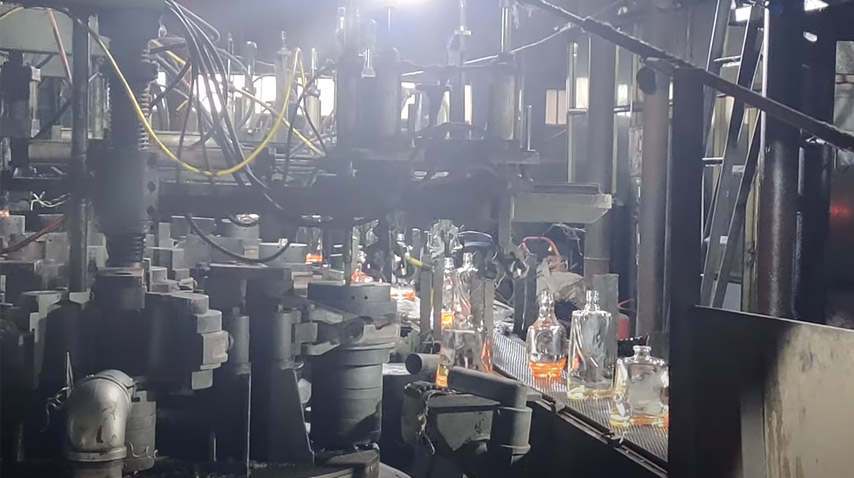
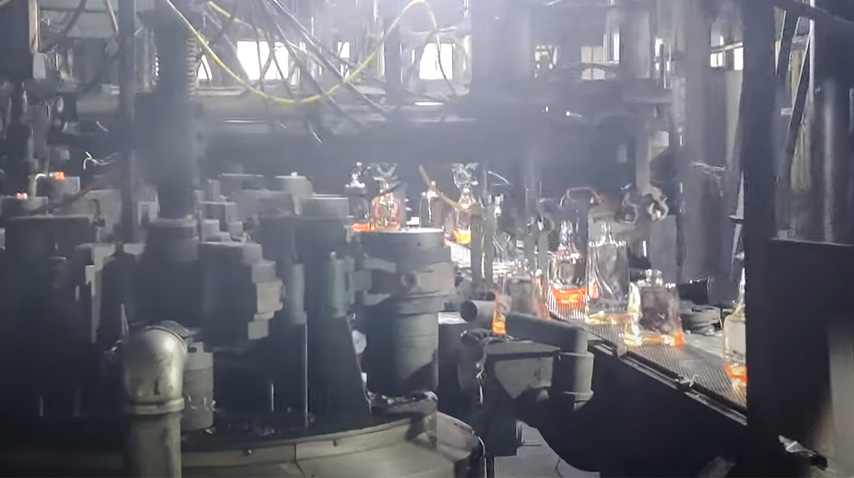
Choosing the right spirit bottle size is one of the most strategic decisions in liquor branding. From compact 50mL miniatures perfect for sampling to imposing 1L magnums that command shelf presence, each volume serves distinct commercial purposes. This guide breaks down standard spirit bottle sizes, their regulatory implications, and how to select the optimal format for your market—featuring insights from industry leaders like RSG Glass, a trusted manufacturer helping brands navigate these choices daily.
Understanding the Spirit Bottle Size Spectrum
The spirits industry operates across a surprisingly wide range of bottle sizes, each with its own commercial logic and regulatory status. At the smallest end, 50mL miniatures—often called "nips"—serve as liquid business cards for sampling programs and travel retail. Moving up, 100mL and 200mL formats function as trial sizes that lower the barrier to entry for premium products without sacrificing per-ounce margins.
The 375mL half-bottle has evolved from a wine industry format into a strategic tool for spirits, particularly in the premium segment where it offers an "accessible luxury" price point. Standard retail formats cluster around 700mL and 750mL—the former being the European Union standard, the latter the North American default. For value-conscious consumers and duty-free channels, 1L bottles provide economy of scale, while 1.5L magnums and larger formats create brand theater for gifting and VIP displays.
.webp "3.2_(2).webp")
The Critical 700mL vs. 750mL Decision
The most consequential size choice for global brands isn't between miniatures and magnums—it's between 700mL and 750mL. This 50mL difference determines your regulatory compliance, production efficiency, and market access.
700mL represents the EU export default. EU Directive 2007/45/EC mandates fixed nominal quantities for spirits, with 700mL serving as the standard retail format. Attempting to sell 750mL bottles in the EU risks customs intervention, fines, or outright border blocking. For any brand with EU retail in its roadmap—whether immediate or future—700mL compliance prevents costly redesigns down the line.
750mL remains the North American standard. Known colloquially as the "fifth," this volume represents consumer expectation across the United States and Canada. Following the January 2025 update to 27 CFR § 5.203, the US Alcohol and Tobacco Tax and Trade Bureau (TTB) now explicitly permits both 700mL and 750mL containers, giving brands flexibility that didn't exist previously.
Smart brands avoid the common pitfall of simply filling 700mL into a 750mL-shaped bottle, which creates an underfilled appearance that damages shelf perception. Instead, leading manufacturers like RSG Glass engineer matched 700mL and 750mL bottle families with shared neck finishes and closure systems, maintaining visual consistency while ensuring regional compliance.
Size-to-Channel Strategy: Matching Format to Function
Miniatures: The Trial Economy
Don't underestimate the commercial power of 50mL and 100mL formats. Industry data suggests brands using systematic miniature sampling programs report conversion rates to full-bottle sales as high as 22%. These compact formats serve multiple strategic functions: airline and hotel minibar placements, gift set components, event marketing handouts, and subscription box inclusions.
Production challenges exist—delicate labeling requirements and specialized filling equipment increase per-unit costs—but the marketing return on investment typically justifies the expenditure for premium spirits categories.
Mid-Formats: The Premium Gateway
The 375mL half-bottle has carved out a distinct niche in spirits marketing. By lowering the absolute price point while maintaining healthy margins, it enables consumers to experiment with ultra-premium products without committing to full-bottle prices. RSG Glass offers extensive 375mL mold options with sophisticated decoration capabilities including frosting, electroplating, and precision screen printing, allowing brands to maintain luxury positioning even at smaller volumes.
Standard Formats: The Revenue Core
Your primary 700mL or 750mL SKU must balance regulatory compliance, logistics efficiency, and brand presence. Engineering considerations extend beyond simple volume containment. Brimful capacity must accommodate the nominal fill volume plus closure displacement, thermal expansion space, and target headspace. Carton dimensions require optimization for both shipping cube efficiency and warehouse handling compatibility. Perhaps most critically, shoulder height and body proportions must make the bottle "read full" at the fill line—a subtle but powerful influence on consumer perception.
Large Formats: The Brand Theater
Magnums (1.5L) and larger formats serve display-driven channels where visual impact outweighs per-unit economy. These bottles require reinforced packaging systems to prevent breakage and maintain stability. RSG Glass addresses this through heavy-base stability engineering and custom carton solutions designed specifically for these high-investment formats.
Regulatory Compliance: What Buyers Must Know
United States (TTB Standards)
The TTB maintains strict Standards of Fill under 27 CFR § 5.203. The January 10, 2025 final rule modernized allowable sizes, now explicitly including 700mL, 750mL, 945mL, 1L, and 1.75L among authorized containers. Compliance requires careful attention to label statements of net contents, which must match nominal volumes exactly, and adherence to average quantity rules under OIML R 87 metrology standards.
European Union
EU regulations prove more restrictive than the US system. Only specific nominal quantities receive approval for spirit drinks, and 750mL notably does not appear on the permitted list. Brands attempting to sell 750mL spirits in the EU face customs interventions, potential fines, border blocking, and reputational damage with distribution partners. For production lines currently outputting 750mL only, partnering with manufacturers offering dual-format families becomes essential for maintaining EU market access.
Partner Spotlight: Why RSG Glass Leads in Spirit Bottle Manufacturing
When navigating complex size requirements, your glass supplier becomes a strategic partner rather than a mere vendor. RSG Glass (Heze Rising Glass Co., Ltd) has established itself as a go-to manufacturer for distilleries worldwide, offering capabilities that directly address the challenges outlined throughout this guide.
Comprehensive Size Range
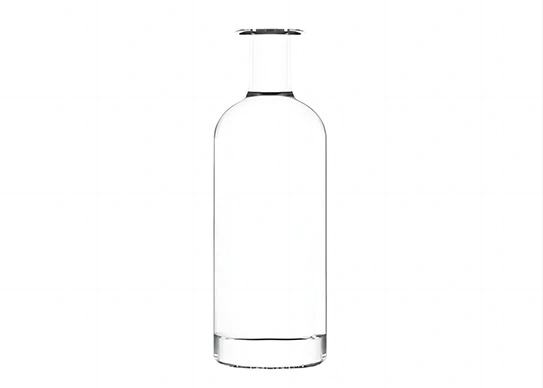
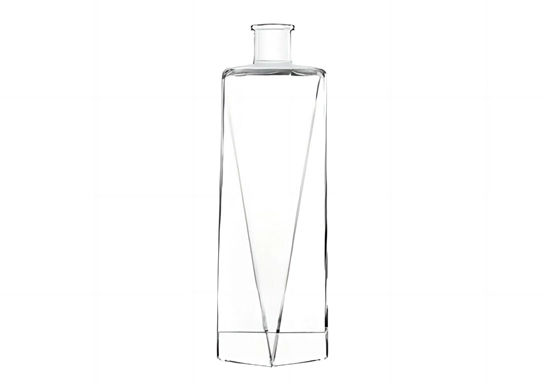
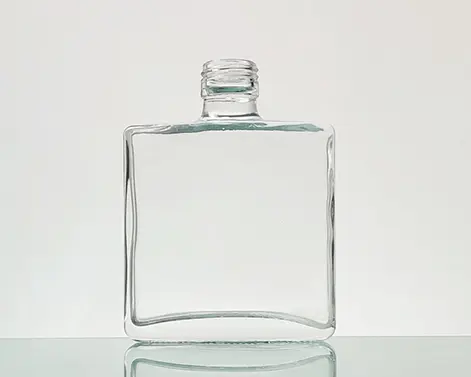
RSG maintains active production across the full spectrum of spirit bottles, from 50mL miniatures up to 3L magnums, including both 700mL EU standards and 750mL US formats. Their catalog encompasses cylindrical vodka bottles, square gin bottles, rectangular whiskey bottles, oval XO and brandy bottles, and fully custom shapes developed through collaborative design processes.
Global Compliance Ready
With over two decades of manufacturing experience, RSG Glass produces bottles meeting both US FDA and EU food packaging safety standards. Their systematic quality approach includes professional quality control ensuring consistent brimful capacity, documentation support for customs and regulatory submissions, and design services that account for regional size requirements from the initial concept phase.
Decoration & Customization
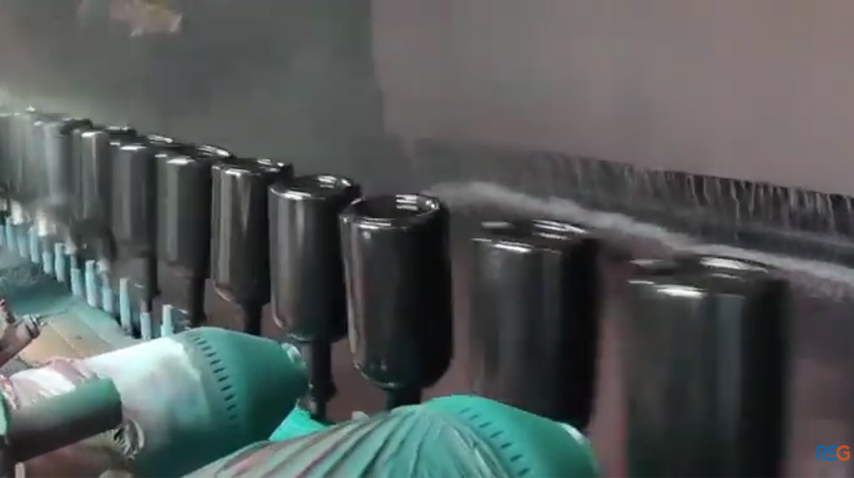
Beyond standard clear flint glass, RSG offers value-added services that differentiate brands at the point of sale. Frosting—using mature acid-etch technology employed by major international spirits brands—creates premium tactile and visual texture. Electroplating delivers metallic finishes for luxury positioning. Color coating and spraying enable custom brand colors and gradients. Screen printing and decals allow direct bottle branding, while embossing integrates raised logos and texture directly into the glass surface.
Operational Efficiency
RSG's production capacity reaches 500,000 pieces daily, with typical lead times of 20 to 30 days supporting both startup distilleries and established global brands. Their location within China's glass bottle industrial park provides integrated access to cap factories, mold makers, and carton suppliers, enabling true one-stop packaging solutions that simplify supply chain management.
Sample & Testing Support
Understanding that new bottles require filling line validation before bulk commitment, RSG provides free stock samples with delivery within three to five days. This risk mitigation step proves critical when switching sizes or introducing new formats, allowing distilleries to test compatibility with existing equipment and processes.
Practical Selection Framework: Five Steps to the Right Size
Navigating bottle size selection requires systematic evaluation. Follow this decision framework to avoid costly missteps.
First, define your primary markets. EU-focused brands should default to 700mL. North America-only brands can standardize on 750mL. Global distribution strategies require dual 700mL and 750mL families with shared specifications to maintain efficiency.
Second, map your channel strategy. Sampling-heavy programs benefit from adding 50mL SKUs. Premium positioning might incorporate 375mL tiers for accessibility. Value and commercial accounts may require 1L or 1.75L options to compete effectively.
Third, validate your production line capabilities. Assess whether your filler can handle multiple sizes efficiently, whether you need changeover support or dedicated lines, and whether closure systems remain compatible across different volumes.
Fourth, engineer the complete system. Rather than simply changing labels, redesign glass geometry to ensure proper visual fill. Recalculate carton dimensions for pallet optimization. Revalidate torque and compression settings for each closure type to prevent leakage or damage.
Fifth, partner with capable suppliers. Choose manufacturers with proven multi-size capabilities, verified regulatory compliance documentation, and decoration services aligned with your brand vision. RSG Glass exemplifies these criteria through their comprehensive size range, global compliance readiness, and integrated customization services.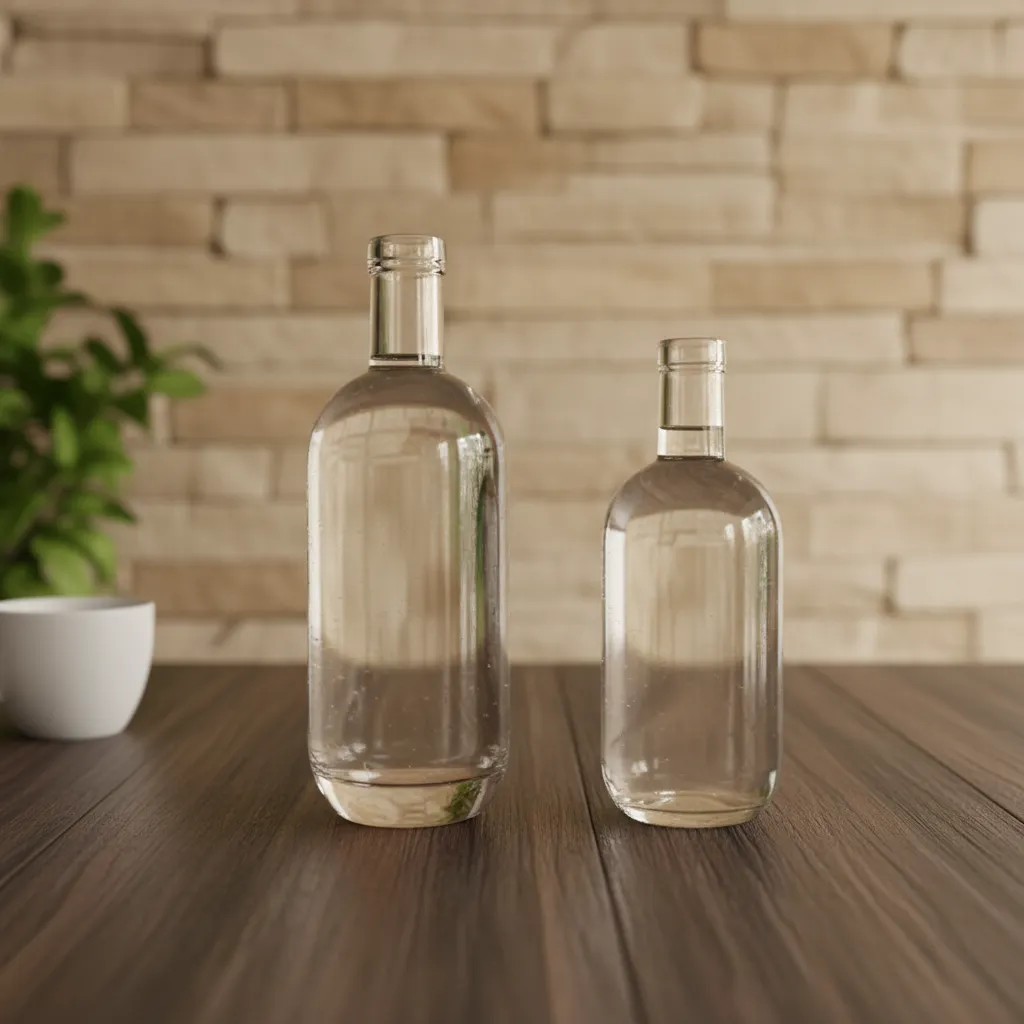
Conclusion: Size as Strategy
Spirit bottle selection transcends mere volume containment. It shapes regulatory compliance, production economics, and consumer perception simultaneously. The 700mL versus 750mL divide alone can determine whether your brand achieves global market access or faces customs barriers.
By understanding the functional role of each format—from 50mL sampling tools to 3L brand statements—and partnering with experienced manufacturers like RSG Glass, brands transform packaging from an operational detail into a genuine competitive advantage.
Whether launching a craft gin in 375mL half-bottles, scaling a vodka brand across dual 700mL EU and 750mL US formats, or creating statement magnums for VIP gifting, the right size strategy aligns your liquid with your business goals and market realities.
Ready to specify your spirit bottles? Request
RSG Glass's catalog to explore options from 50mL to 3L with compliant dual-format engineering and premium decoration capabilities that elevate your brand presence.
About the Author: This guide synthesizes regulatory documentation from the US TTB and EU directives with manufacturing insights from
RSG Glass, a leading China-based spirit bottle manufacturer serving global distilleries since 2004.
Keywords: spirit bottle sizes, 700mL vs 750mL, standard liquor bottle volumes, custom glass bottles,
RSG Glass, spirit packaging guide, TTB standards of fill, EU bottle sizes, miniature spirit bottles, magnum bottles, distillery packaging
 English
 français
 Deutsch
 Español
 italiano
 русский
 português
 tiếng việt
 Türkçe
 Polska
 Indonesia